sample stem project
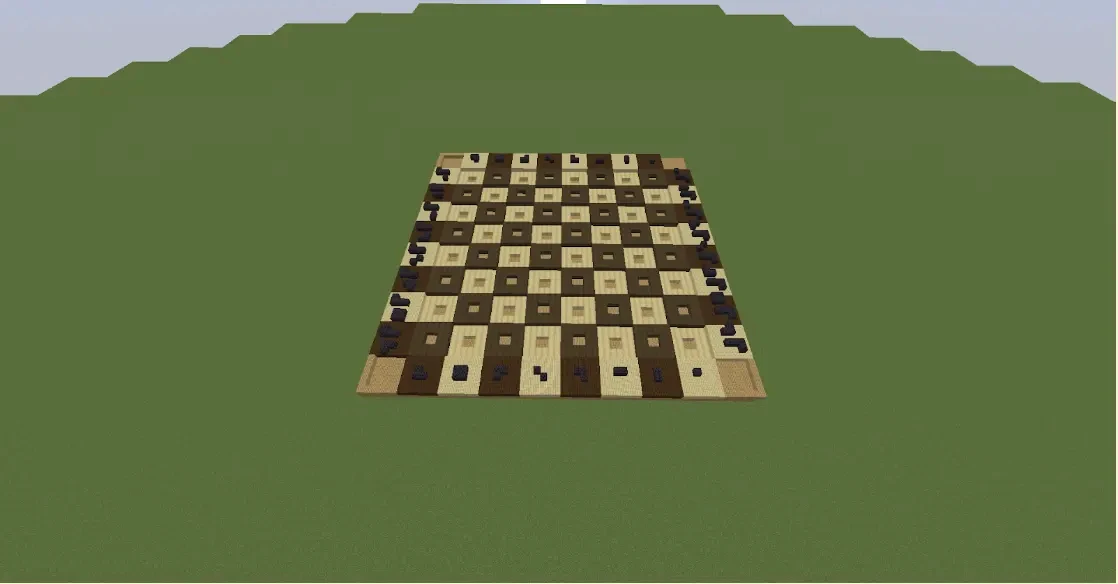
Visually-Impaired Chessboard
By Jack H.
Back when I played chess more, I played someone who was almost completely blind. They had two boards: one was the actual board, and the other was his "feeling" board. This system seemed outrageous because he had to have 2 boards in order to play and feel, and this system could be simplified. I remembered all of this after using AI to generate project ideas for my “Forces of Nature” expedition and found one similar to this experience.
Project Process
Brainstorming
First, we brainstormed about hobbies or sports we participate in and what kind of equipment modification could enhance the performance for the user.
Project Proposal
Identify the problem: Briefly describe the idea you have for a prototype that will replace an existing product: a better chessboard for visually impaired players.
Technical Issues
Pieces can be hard to distinguish because some do not have clear visual or tactile differences, making it difficult for a visually impaired player to know which piece is which or what move an opponent has made. This can lead to mistakes that are sometimes only solved by asking the other person to explain their move. I experienced this firsthand when I played against someone who was visually impaired. He used a different chessboard, so I had to make his moves on my board while also making my own moves, and he had to do the same on his board. This made the game complicated and caused me to make several mistakes. His pieces were also fairly standard because he had owned the set before becoming visually impaired.
Economic Issues
Accessible chessboards can vary widely in price, which can make it difficult for someone with a limited budget to find a good option. I have seen prices range from around $30 to $200, while a basic standard chess set can cost much less. This means that accessibility can come with a significant additional cost, especially for higher-quality boards. A better solution would combine affordability with useful accessibility features, creating a board that is easier to understand by touch without making the price unnecessarily high.
Health & Safety Issues
I have not found strong evidence of major health or safety issues specifically related to accessible chessboards. However, long periods of chess can be mentally tiring. Some players describe mental fatigue, reduced focus, and headaches after playing for extended periods. Based on this research, health and safety appear to be less significant concerns than the technical and economic issues, although mental fatigue may still be worth considering during long playing sessions.
Sources: Link, Link
Solutions - We used the SCAMMPERR (Substitute, Combine, Adapt, Magnify, Modify, Put it to another use, Eliminate, Rearrange/Reverse) technique to brainstorm some possible solutions to the product.
Sketches of prototype

Newton’s Laws of Physics
How Newton’s 1st Law of Physics applies to my prototype: When the board is not being used, the pieces will not move randomly unless acted on by another force, per se, a hand.
How Newton’s 2nd or 3rd Laws of Physics apply to my prototype: The second law could be applied when playing a game and accidentally knocking over a piece, or a domino effect where the third law could be taken into account when a piece falls and hits another.
Types of Forces
What types of forces act on your sport or hobby prototype when it is in use?: When it is not being moved or played, it is just normal, but when people are playing a game it will probably be applied and normal, and you could also say friction and air resistance as well.
Building & Testing the Prototype
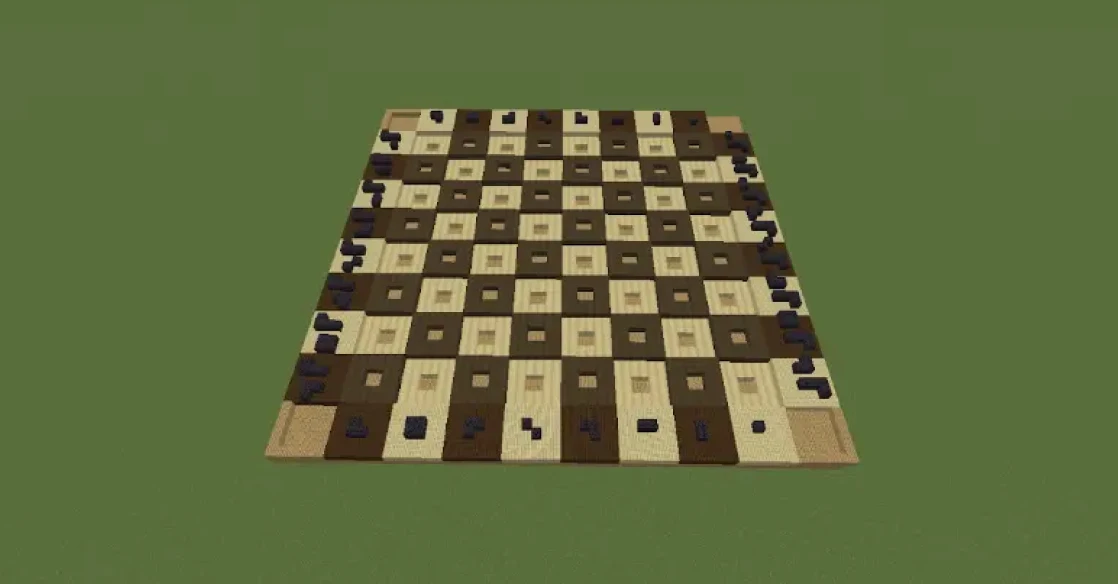
I conducted a Consumer Survey and received all results of 6/10 or higher. Some people didn’t get how the notation input machine worked, and one person didn’t like the clock, but everyone liked the board. Based on the results, I needed to make my notation input machine easier to understand and make my click a better portion.
Here is my presentation describing the Visually-Impaired Chessboard.
sample stem project
Visually-Impaired Chessboard
By Jack H.
Back when I played chess more, I played someone who was almost completely blind. They had two boards: one was the actual board, and the other was his "feeling" board. This system seemed outrageous because he had to have 2 boards in order to play and feel, and this system could be simplified. I remembered all of this after using AI to generate project ideas for my “Forces of Nature” expedition and found one similar to this experience.
Project Process
Brainstorming
First, we brainstormed about hobbies or sports we participate in and what kind of equipment modification could enhance the performance for the user.
Project Proposal
Identify the problem: Briefly describe the idea you have for a prototype that will replace an existing product: a better chessboard for visually impaired players.
Technical Issues
Pieces can be hard to distinguish because some do not have clear visual or tactile differences, making it difficult for a visually impaired player to know which piece is which or what move an opponent has made. This can lead to mistakes that are sometimes only solved by asking the other person to explain their move. I experienced this firsthand when I played against someone who was visually impaired. He used a different chessboard, so I had to make his moves on my board while also making my own moves, and he had to do the same on his board. This made the game complicated and caused me to make several mistakes. His pieces were also fairly standard because he had owned the set before becoming visually impaired.
Economic Issues
Accessible chessboards can vary widely in price, which can make it difficult for someone with a limited budget to find a good option. I have seen prices range from around $30 to $200, while a basic standard chess set can cost much less. This means that accessibility can come with a significant additional cost, especially for higher-quality boards. A better solution would combine affordability with useful accessibility features, creating a board that is easier to understand by touch without making the price unnecessarily high.
Health & Safety Issues
I have not found strong evidence of major health or safety issues specifically related to accessible chessboards. However, long periods of chess can be mentally tiring. Some players describe mental fatigue, reduced focus, and headaches after playing for extended periods. Based on this research, health and safety appear to be less significant concerns than the technical and economic issues, although mental fatigue may still be worth considering during long playing sessions.
Sources: Link, Link
Solutions - We used the SCAMMPERR (Substitute, Combine, Adapt, Magnify, Modify, Put it to another use, Eliminate, Rearrange/Reverse) technique to brainstorm some possible solutions to the product.
Sketches of prototype
Newton’s Laws of Physics
How Newton’s 1st Law of Physics applies to my prototype: When the board is not being used, the pieces will not move randomly unless acted on by another force, per se, a hand.
How Newton’s 2nd or 3rd Laws of Physics apply to my prototype: The second law could be applied when playing a game and accidentally knocking over a piece, or a domino effect where the third law could be taken into account when a piece falls and hits another.
Types of Forces
What types of forces act on your sport or hobby prototype when it is in use?: When it is not being moved or played, it is just normal, but when people are playing a game it will probably be applied and normal, and you could also say friction and air resistance as well.
Building & Testing the Prototype
I conducted a Consumer Survey and received all results of 6/10 or higher. Some people didn’t get how the notation input machine worked, and one person didn’t like the clock, but everyone liked the board. Based on the results, I needed to make my notation input machine easier to understand and make my click a better portion.
Here is my presentation describing the Visually-Impaired Chessboard.
sample stem project
Visually-Impaired Chessboard
By Jack H.
Back when I played chess more, I played someone who was almost completely blind. They had two boards: one was the actual board, and the other was his "feeling" board. This system seemed outrageous because he had to have 2 boards in order to play and feel, and this system could be simplified. I remembered all of this after using AI to generate project ideas for my “Forces of Nature” expedition and found one similar to this experience.
Project Process
Brainstorming
First, we brainstormed about hobbies or sports we participate in and what kind of equipment modification could enhance the performance for the user.
Project Proposal
Identify the problem: Briefly describe the idea you have for a prototype that will replace an existing product: a better chessboard for visually impaired players.
Technical Issues
Pieces can be hard to distinguish because some do not have clear visual or tactile differences, making it difficult for a visually impaired player to know which piece is which or what move an opponent has made. This can lead to mistakes that are sometimes only solved by asking the other person to explain their move. I experienced this firsthand when I played against someone who was visually impaired. He used a different chessboard, so I had to make his moves on my board while also making my own moves, and he had to do the same on his board. This made the game complicated and caused me to make several mistakes. His pieces were also fairly standard because he had owned the set before becoming visually impaired.
Economic Issues
Accessible chessboards can vary widely in price, which can make it difficult for someone with a limited budget to find a good option. I have seen prices range from around $30 to $200, while a basic standard chess set can cost much less. This means that accessibility can come with a significant additional cost, especially for higher-quality boards. A better solution would combine affordability with useful accessibility features, creating a board that is easier to understand by touch without making the price unnecessarily high.
Health & Safety Issues
I have not found strong evidence of major health or safety issues specifically related to accessible chessboards. However, long periods of chess can be mentally tiring. Some players describe mental fatigue, reduced focus, and headaches after playing for extended periods. Based on this research, health and safety appear to be less significant concerns than the technical and economic issues, although mental fatigue may still be worth considering during long playing sessions.
Sources: Link, Link
Solutions - We used the SCAMMPERR (Substitute, Combine, Adapt, Magnify, Modify, Put it to another use, Eliminate, Rearrange/Reverse) technique to brainstorm some possible solutions to the product.
Sketches of prototype
Newton’s Laws of Physics
How Newton’s 1st Law of Physics applies to my prototype: When the board is not being used, the pieces will not move randomly unless acted on by another force, per se, a hand.
How Newton’s 2nd or 3rd Laws of Physics apply to my prototype: The second law could be applied when playing a game and accidentally knocking over a piece, or a domino effect where the third law could be taken into account when a piece falls and hits another.
Types of Forces
What types of forces act on your sport or hobby prototype when it is in use?: When it is not being moved or played, it is just normal, but when people are playing a game it will probably be applied and normal, and you could also say friction and air resistance as well.
Building & Testing the Prototype
I conducted a Consumer Survey and received all results of 6/10 or higher. Some people didn’t get how the notation input machine worked, and one person didn’t like the clock, but everyone liked the board. Based on the results, I needed to make my notation input machine easier to understand and make my click a better portion.
Here is my presentation describing the Visually-Impaired Chessboard.
Take the next step.
Share a few details and we’ll follow up with next steps, schedule information, and ways to learn more — typically within one business day.
